






Types of anchors and their applications

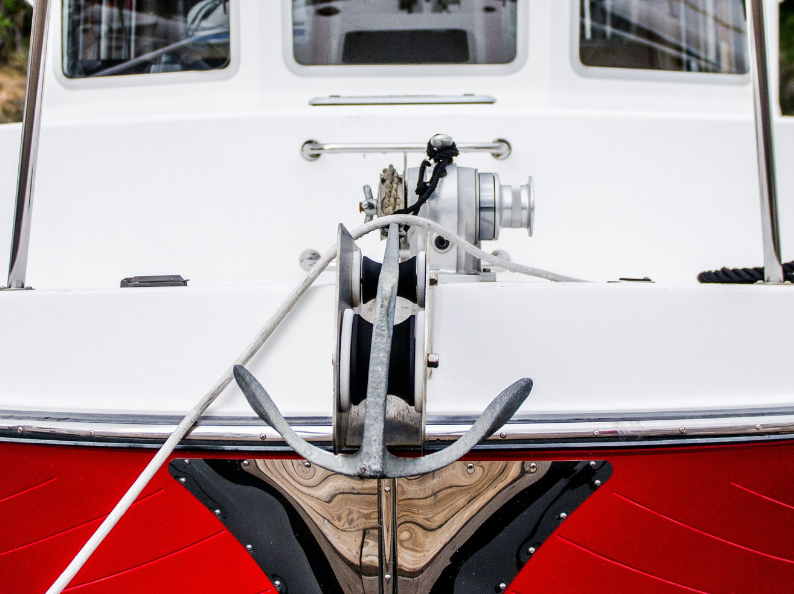
Selecting the right anchor is crucial for the safety and effectiveness of anchoring your vessel. This guide details the most common types of anchors, exploring their ideal uses and maintenance tips, helping you make informed decisions to care for and maintain your boat, especially if you are in a boatyard or planning to repair and maintain it.
Why is choosing the right anchor critical?
The right anchor ensures that your boat remains fixed in its position under various marine conditions and types of seabeds. An incorrect choice can result in the boat dragging, which could lead to damage to the hull or, in worse cases, the boat completely breaking loose and drifting.
Description of types of anchors and their applications
Plough (CQR) Anchor
Has a robust structure reminiscent of a farm plough, ideal for penetrating varied marine bottoms.
- Advantages: Excellent retention power, easily reorients with changes in wind or current direction.
- Disadvantages: Can be heavy and difficult to store due to its shape and size.
- Recommended use: Larger boats that require secure anchoring in different types of bottoms, including mud, sand, and gravel.
Danforth Anchor
Has large “flukes” that provide good penetration in soft bottoms like mud or sand.
- Advantages: Light compared to its holding power and easy to store.
- Disadvantages: Reduced performance in rocky or very hard bottoms.
- Recommended use: Ideal for small to medium-sized vessels and use in sandy or muddy bottoms.
Bruce or Claw Anchor
The claw shape allows the anchor to grip well in most bottoms.
- Advantages: Good overall performance and very stable, rarely dislodges.
- Disadvantages: Not the best in weedy or very hard bottoms.
- Recommended use: Vessels operating in areas with varied bottoms and where constant reorientation of the anchor is required.
Mushroom Anchor
Its mushroom shape allows it to bury in soft bottoms.
- Advantages: Ideal for permanent anchoring.
- Disadvantages: Ineffective in hard or rocky bottoms, and impractical for temporary use.
- Recommended use: Fixing buoys and in situations where the boat remains in a fixed location, such as lakes or protected bays.
How to select the right anchor
Choosing the right anchor for your boat is more than a matter of preference; it is a crucial decision that directly impacts the safety and stability of your vessel. The right choice is based on a clear understanding of several key factors that must be carefully considered to ensure effective and safe anchorage.
Key factors for selecting an anchor
- Type of seabed: This is one of the most critical factors. Different types of anchors are designed to perform best in certain bottoms. For example, plough anchors generally work well in sandy and muddy bottoms, while Bruce anchors are preferred for rocky or coral bottoms. Determining the types of bottoms where you most often anchor your boat will help you choose an anchor that offers maximum effectiveness and safety.
- Size and weight of your vessel: Larger and heavier vessels require more robust anchors to withstand the forces of current and wind. Not only is the weight of the anchor important, but also its design and the surface area it can cover to keep the boat fixed. An anchor that is too light for a large boat can easily drag, while one that is too heavy for a small boat will be difficult to handle and store.
- Prevailing wind and current conditions: Areas with extreme weather and marine conditions demand anchors with superior holding power. In waters with strong currents or winds, an anchor that can quickly readjust to changes in the direction of the wind or current, such as a Bruce or plough anchor, is essential to maintain the position of the boat.
- Ease of handling and storage: Consider your ability to physically handle the anchor and the space available for storing it on board. Large and heavy anchors may require a windlass or winch for deployment and retrieval, which should also be evaluated based on your vessel’s capability.
- Frequency and duration of anchoring: If you plan to spend a lot of time anchored, investing in a high-quality anchor that can withstand prolonged use is crucial. Similarly, for those who anchor occasionally, a more basic anchor may be sufficient.
- Budget: While safety should never be compromised for economic reasons, the price range of anchors varies significantly. Evaluate options within your budget that still meet the necessary safety and efficacy requirements for your type of navigation.
Anchor maintenance
Properly maintaining your anchor not only ensures its effectiveness when you need it most but also extends its life significantly. A well-established maintenance routine is essential for any crucial piece of nautical equipment, and the anchor is no exception. Here we detail how to carry out proper maintenance to ensure both the longevity and effectiveness of your anchor.
Regular inspection
It is vital to conduct regular inspections of your anchor. This involves looking for signs of corrosion, wear, or physical damage that could compromise its operation. Corrosion is especially problematic in marine environments due to the saltiness of the water, which can accelerate the oxidation process of metals. Checking your anchor after each use allows you to identify any signs of deterioration early and take measures before these issues affect its ability to keep your vessel safe.
Cleaning after each use
Removing debris and sediments from your anchor after each use is crucial to maintaining its optimal condition. Sediments and algae can adhere to the metal and, over time, contribute to corrosion and other types of damage. Thorough cleaning involves rinsing the anchor with fresh water to remove salt and debris, which is particularly important if you sail in saltwater. Make sure to clean the joints and areas where mud and other materials can accumulate and dry, as these deposits can hinder the effective deployment of the anchor.
Anchor storage tips
Proper storage of the anchor is equally crucial. Once the anchor is clean and dry, it should be stored in a place where it is not exposed to moisture or physical bumps that can deform or damage it. Some sailors prefer to wrap their anchors in absorbent material to ensure that any residual moisture is absorbed and to protect the anchor from impacts. Consider also the possibility of applying a lubricant or corrosion protector to the metal parts to prevent rust and ensure that the anchor is always ready for use.
Safety starts with the right anchor choice
Choosing the right anchor and maintaining it properly are essential to ensuring safety on the water. This component is not just a tool; it is a lifeline when you are at sea. Visit Barcelona Nautic Center for expert advice on selecting and maintaining anchors, ensuring that your next sailing season is as safe as it is enjoyable.
Before you return to the water, make sure your anchor is in optimal condition. If you have doubts about which type of anchor is best for your vessel, or you need maintenance or refit services, contact us at Barcelona Nautic Center. We are here to help you prepare for a safe and successful sailing season.